Microalgae cultivated in our own open-pond system, plus nano toxin binding for feed and aquaculture. Backed by Indian regulatory approvals and independent institutional trials.
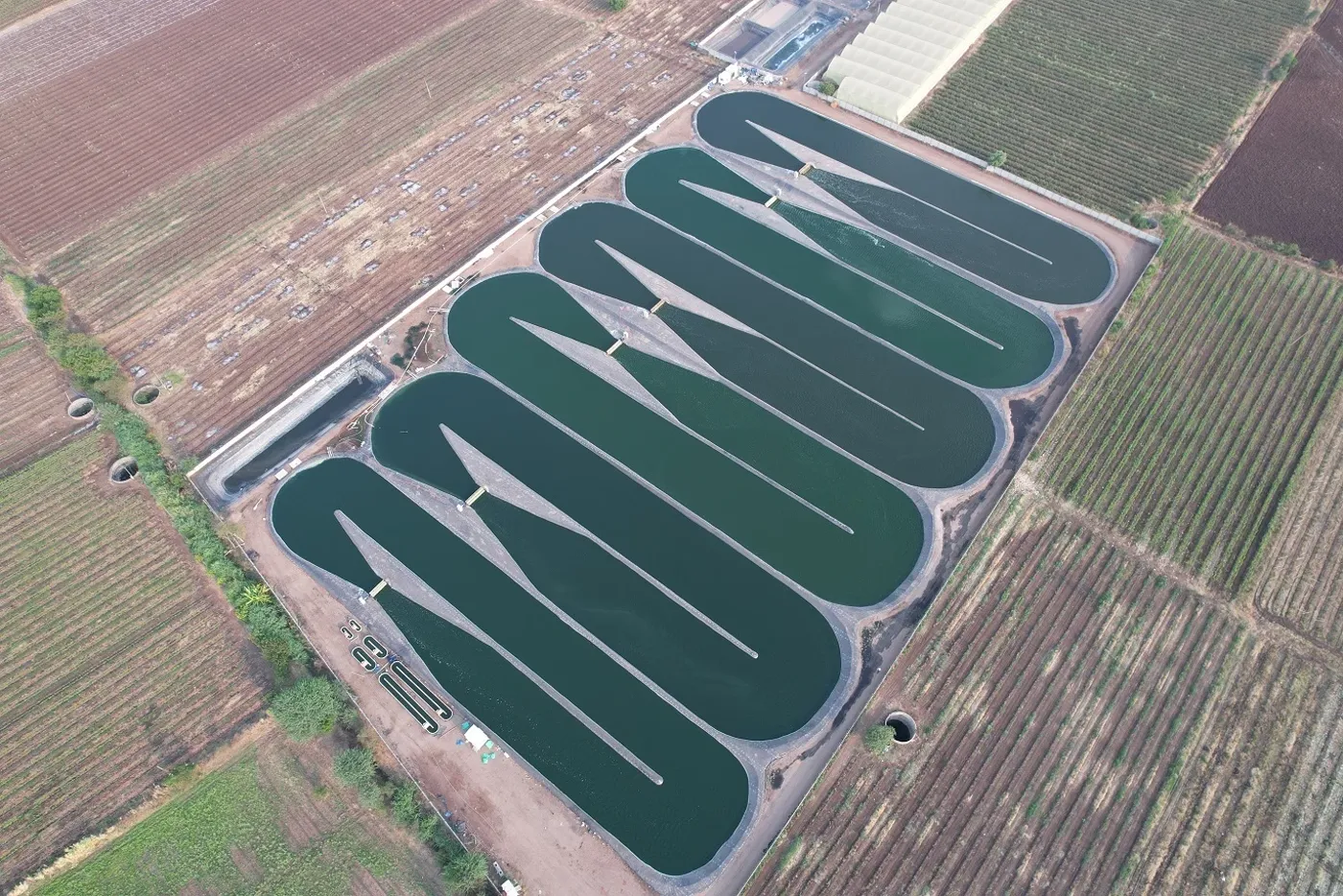
Microalgae grow by photosynthesis. Every pond on our campus takes in carbon dioxide and gives back oxygen — so cultivation is not simply less harmful to the environment, it is actively capturing carbon.
CO₂
Absorbs carbon dioxide
Our open ponds take up CO₂ continuously as the biomass grows, reducing greenhouse gas load rather than adding to it.
O₂
Releases oxygen
Photosynthesis returns oxygen to the atmosphere across the full cultivation cycle.
LOOP
Farm to Bottle. Bottle to Farm.
The harvested biomass goes back out as a crop biostimulant and as aquaculture and animal nutrition — closing the loop on our own land.
01 / Sub-segment
Microalgae
Derived from Chlorella vulgaris and cultivated in an open-pond system, our microalgae solutions serve three segments — agriculture, aquaculture and the animal feed industry.
Agriculture
AlgaVita™
India’s FCO-approved microalgae biostimulant
A Chlorella vulgaris based biostimulant for multi-stage crop support — used as a liquid from seed to fruit. AlgaVita™ supports root development, plant vigour, flowering and yield, and helps crops hold up under abiotic stress.
Targets abiotic stress including heat, salinity, drought and waterlogging.
Supports root development, plant vigour, flowering and yield across crop stages.
Cultivation ponds absorb carbon dioxide as the microalgae grow.
A differentiated biochemical profile versus seaweed extracts — including roughanic acid (7,10,13-hexadecatrienoic acid) at 6.86% and alpha-linolenic acid at 19.42% of total fatty acids, both generally absent or low in seaweed extracts.
Ferulic acid as the dominant phenolic antioxidant and catechin as the dominant flavonoid.
Trial reports and regulatory documentation available on request.
Next-generation multivitamins and nutrients for aquaculture
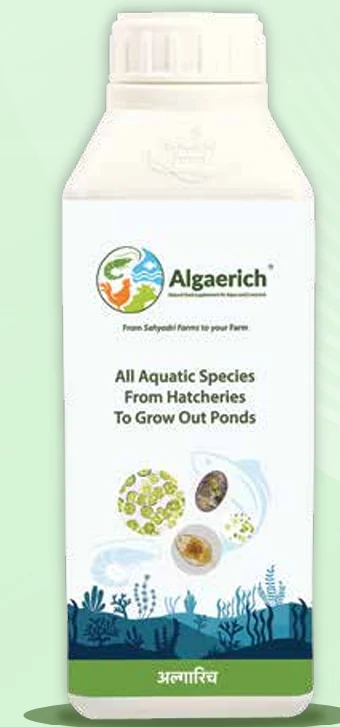
An extract of naturally occurring green microalgae Chlorella vulgaris, supplying functional amino acids, polysaccharides, chlorophyll, antioxidants, vitamins, carotenoids and essential minerals. For all aquatic species, from hatcheries to grow-out ponds — and for poultry and cattle nutrition.
CAA Approved
AquaculturePoultryCattleLiquid & FBD powder
Innate immunity
Supports innate immune response in aquatic species.
Feed conversion
Helps improve Feed Conversion Ratio (FCR).
Pond productivity
Boosts phytoplankton productivity in aquaculture ponds.
Product parameters & specifications
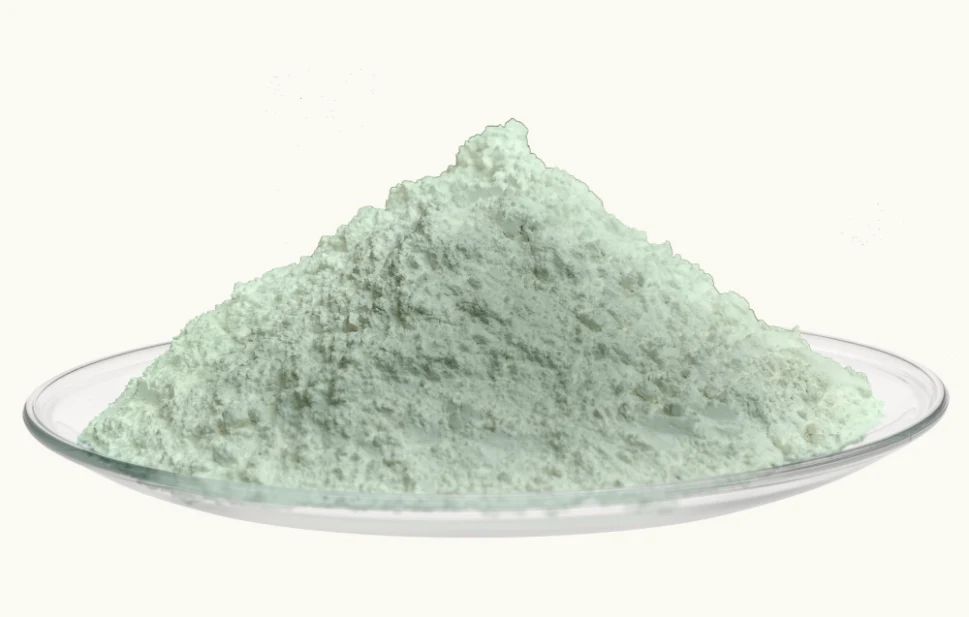
Available as a liquid concentrate and as fluidized-bed-dried (FBD) powder.
Ask our team for the current specification sheet and CAA approval documentation.
AlgaRich product parameters. Composition values refer to FBD powder; confirm the current specification with our team.
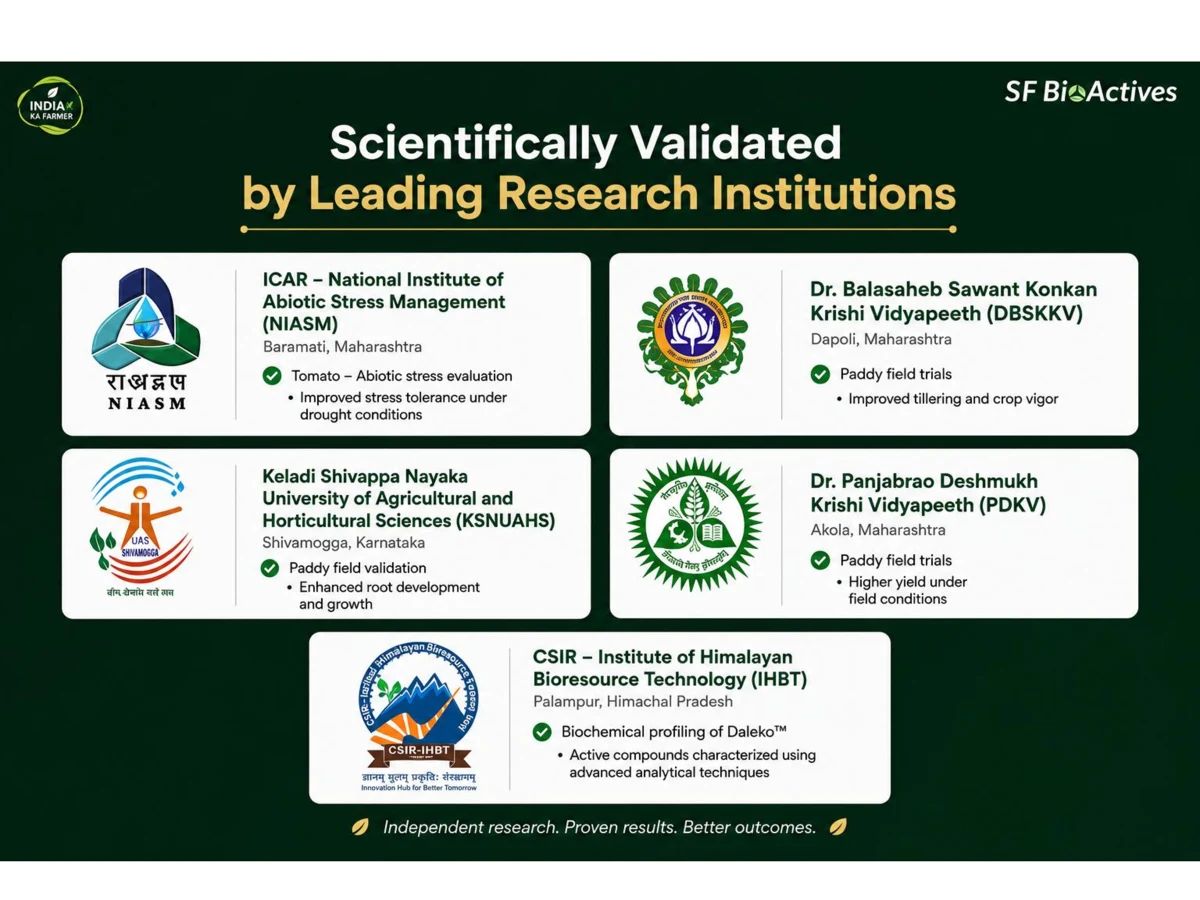
Our microalgae products have been evaluated by ICAR — National Institute of Abiotic Stress Management, and through paddy field trials at DBSKKV Dapoli, PDKV Akola and KSNUAHS Shivamogga. Active compounds were characterised at CSIR — Institute of Himalayan Bioresource Technology, Palampur.
Feed additives developed for mycotoxin and heavy-metal management in animal feed and aquaculture.
Animal feed & aquaculture
PRETXI
Nano Toxin Binder
A nano-bio-technology based feed additive that combines citrus-derived bioactives with a hierarchical nanoporous framework — engineered for broad-spectrum mycotoxin and heavy-metal binding.
AquaculturePoultryLivestockAnimal feed
Engineered nanoporous framework
Developed from novel hierarchical nanoporous naturally occurring zeolite, engineered at the nano-scale.
Fortified with bioactives
Hepatoprotecting citrus bioactives — limonene, hesperidin, naringin and terpinene — support liver detoxification.
Surface area & porosity
386 ± 2 m²/g surface area with a uniform 5 ± 2 Å pore size for maximum adsorption contact.
Binding performance & applications
Anionic and cationic nano-framework for broad-spectrum binding across major mycotoxin classes.
Applications across aquaculture, poultry and livestock feed systems.
Request application rates and technical guidance for your feed system.
Adsorption efficiency across physiological pH conditions, at 50 ppb concentration.
-ai.svg)





.svg)


